How a Trouser Hem Should Break
The way a trouser leg sits on your shoe says more about the fit than almost anything else on the garment.
September 23, 2026 · 4 min read
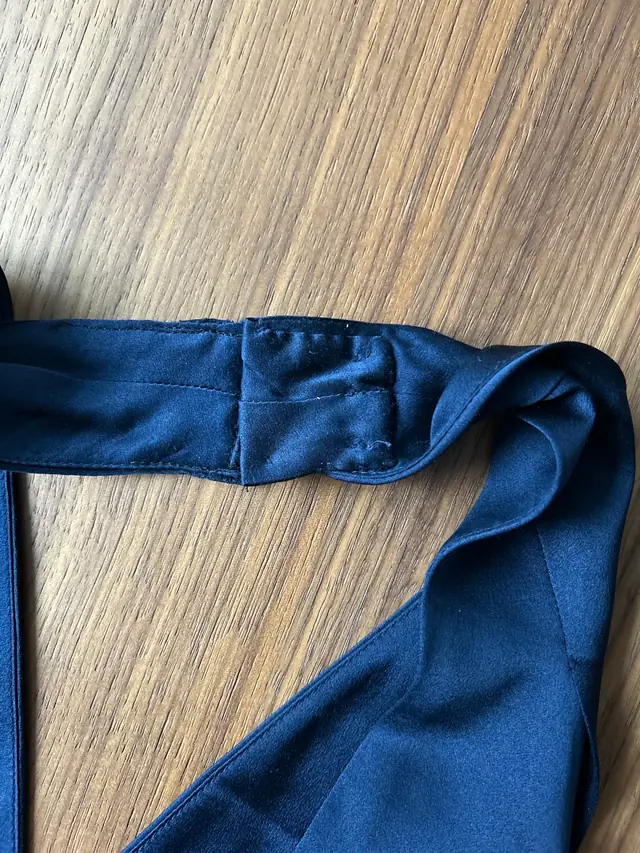
Most men and women who bring in a pair of trousers for hemming have never heard the word break, but they know it the moment they see it done wrong. The break is the fold of fabric that forms where the front of the trouser leg meets the top of your shoe. Get it right and the leg falls in a clean line. Get it wrong and the trouser either puddles around your ankle or rides up and shows too much sock the moment you sit down. It is a small detail, but it is one of the first things people notice about how well a trouser fits, even if they could not tell you why.
The three common breaks
A full break means the fabric folds once or twice at the front of the shoe, with the back of the hem sitting close to where the heel meets the sole. It reads as relaxed and a little old fashioned, and it is forgiving if you are between sizes or wear the same shoes with the same heel height most of the time. A half break has a slight crease at the front and a hem that grazes the top of the shoe without stacking. This is the safest choice for most business and event wear because it looks tidy standing or sitting and works with a range of shoe styles. A no break, sometimes called a broken hem or a short hem, sits above the shoe entirely, showing a bit of sock or ankle. It reads modern and sharp, especially on a slimmer leg, but it is less forgiving of a longer inseam or a bulkier shoe, and it can look unintentionally short if the trouser was not cut with that length in mind.
- Full break: relaxed, forgiving, more traditional
- Half break: the safest default for suits and dress trousers
- No break: modern, sharper, shows the shoe and ankle
Cuffs or plain hem
A cuff, sometimes called a turn up, adds weight to the bottom of the leg and helps a wider or pleated trouser hang straight. It tends to suit a half break or slightly shorter length so the cuff does not disappear into the shoe. A plain hem is the more common choice on a slimmer flat front trouser and works at any break length. Neither is right or wrong on its own. It comes down to the cut of the trouser and how you plan to wear it. If you are not sure which suits the garment you brought in, ask while it is pinned rather than after it is sewn. Once the hem is finished, adjusting the cuff height again means unpicking and redoing the whole hem, which costs more time than getting the decision right the first time.
Dress trousers versus jeans
Jeans get hemmed differently from dress trousers because of the fabric weight and the way the leg is constructed. A jean hem is often finished with the original chain stitch look preserved, sometimes fading the new hem to roughly match the worn hem it replaces so it does not look freshly cut. Dress trousers and suit trousers get a blind hem, stitched from the inside so no thread shows on the front of the leg. Both are common requests and neither takes long once the length is pinned correctly on your actual shoe. Wool trousers also drape differently than cotton chinos or denim, which means the same measured length can read a little longer or shorter once the fabric settles and hangs on its own.
Why the shoes matter
The single biggest mistake in a trouser hem is measuring the length without the shoes you actually plan to wear. A half inch difference between a dress shoe with a thin sole and a boot with a thick heel changes the break completely, and it is the kind of thing that only shows up once you are standing in front of a mirror at home in the wrong shoes. Bring the pair you will wear most with that trouser, or at least a pair with a similar heel height, when you come in to have it pinned.
Check it standing and walking
Before you leave with a pinned hem, stand normally in front of a mirror rather than at attention, and take a few steps if there is room. A break that looks right while you are stiff and still can shift once you are moving naturally or sitting down for a stretch. If something looks off once you are walking around in it, say so before it gets sewn. It is a much smaller fix at the pinning stage than after the stitching is finished.
Getting it done
Gregory's Fine Tailoring has been altering trousers in Waltham since 1978, and hemming is one of the most common jobs that comes through the door. Walk-ins are welcome, no appointment needed, and for most tailoring jobs like this you can bring the garment in during the morning and have it back the same day. Bring the shoes, bring the trousers, and call (617) 482-1111 if you want to check on timing before you come by 18 Arcadia Ave.
Gregory's Fine Tailoring, (617) 482-1111
Call (617) 482-1111